Yes, a man can be completely infertile, but it depends on what is causing the problem. In some cases, a man may have no sperm in his semen. This is called azoospermia. But “no sperm in the semen” does not always mean there is no chance of having a biological child.
Some causes of azoospermia are treatable. In other cases, sperm may still be produced inside the testicles but blocked from reaching the semen. Sometimes, sperm can be retrieved directly from the testicles and used in assisted fertility treatment, such as IVF with ICSI.
The most important first step is testing. A semen analysis can show whether sperm are present in the semen, and repeat testing is usually needed to confirm a very low or zero sperm result. NICE guidance recommends repeat confirmatory semen analysis after an abnormal result, and says that if azoospermia or severe oligozoospermia is found, the repeat test should happen as soon as possible rather than waiting 3 months.
What does it mean for a man to be completely infertile?
When people ask if a man can be completely infertile, they usually mean one of two things:
- Can a man have no sperm at all?
- Can a man have no chance of having a biological child?
These are not always the same thing.
A man may have azoospermia, which means there are no sperm seen in the semen sample. But the reason matters. There may be a blockage stopping sperm from getting into the semen, or the testicles may not be producing enough sperm.
That difference is important because some cases can be treated, and some men with azoospermia may still have sperm retrieved for fertility treatment.
What is azoospermia?
Azoospermia means there are no sperm found in the ejaculate after semen analysis.
This does not mean there is no semen. A man with azoospermia can still ejaculate. The semen may look normal, but it contains no measurable sperm.
That is why semen appearance alone cannot tell you whether sperm are present. A sample can look completely normal but still contain no sperm.
The NHS guide to low sperm count explains that the main test for low sperm count is semen analysis, which checks the amount of sperm, how fast they move and their shape. If the test shows a possible problem, another semen analysis is usually done to confirm the result.
Can a man be 100% infertile?
Yes, some men may be completely infertile if they do not produce sperm and there is no sperm that can be retrieved.
However, many men who receive a zero sperm result should not assume that this is the final answer after one test.
A zero sperm result needs medical follow-up. There may be a collection issue, a temporary factor, a blockage, a hormonal problem or another treatable cause. Further testing can help show whether sperm production is happening and whether sperm retrieval or treatment is possible.
So the more accurate answer is:
A man can be completely infertile, but a single abnormal semen result does not always prove it.
Can a man ejaculate if he has no sperm?
Yes. A man can ejaculate semen even if there are no sperm in the semen.
This is because semen and sperm are not the same thing.
Semen is the fluid that comes out during ejaculation. Sperm are the reproductive cells inside that fluid. Most of the semen fluid comes from glands such as the seminal vesicles and prostate, not directly from sperm cells.
This is why a man may have normal-looking semen, normal ejaculation and even a normal sex drive, but still have azoospermia.
Testing is the only way to know whether sperm are present.
What causes azoospermia?
Azoospermia can happen for different reasons. The main categories are usually:
- Pre-testicular causes
These are problems with hormone signals that tell the testicles to produce sperm. - Testicular causes
These are problems within the testicles that affect sperm production. - Post-testicular or obstructive causes
These happen when sperm are being produced but are blocked from entering the semen.
Cleveland Clinic explains that azoospermia can have several causes, and that many causes are treatable. It also notes that for some men, live sperm may be retrieved and used with assisted reproductive techniques such as IVF.
Obstructive azoospermia: sperm are blocked
Obstructive azoospermia means sperm are being produced, but they cannot get into the semen because of a blockage.
This can happen because of:
- Previous vasectomy
- Congenital absence of the vas deferens
- Infection or inflammation
- Scarring after surgery
- Blockage in the epididymis
- Ejaculatory duct obstruction
In some cases, surgery may be able to repair the blockage. In other cases, sperm may be retrieved directly and used in IVF with ICSI.
NICE describes obstructive azoospermia as the absence of sperm in the ejaculate because of an obstruction in areas such as the epididymis, vas deferens or ejaculatory ducts.
Non-obstructive azoospermia: sperm production is very low or absent
Non-obstructive azoospermia means the issue is with sperm production itself.
The testicles may be producing very few sperm or no sperm at all.
Possible causes include:
- Genetic conditions
- Klinefelter syndrome
- Y-chromosome microdeletions
- Previous chemotherapy or radiotherapy
- Undescended testicles
- Testicular injury
- Severe varicocele
- Hormonal disorders
- Anabolic steroid use
- Testosterone replacement therapy
- Infection or inflammation
- Unknown causes
This type can be more complex. Some men may still have small areas of sperm production inside the testicles. In selected cases, sperm retrieval may be attempted by a specialist.
AUA/ASRM guidance recommends specific genetic testing, such as Y-chromosome microdeletion analysis, for males with primary infertility and azoospermia or very low sperm concentration.
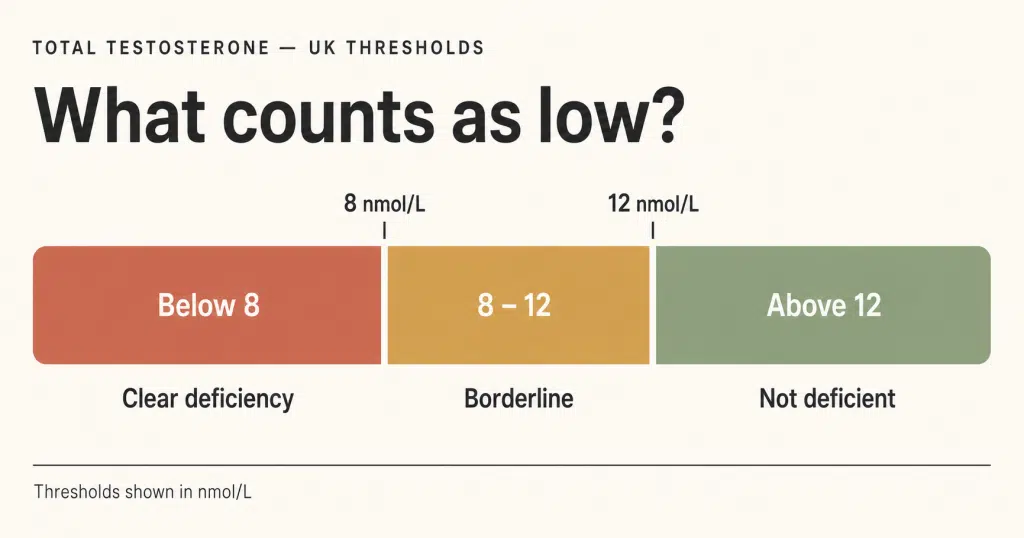
Can low testosterone make a man infertile?
Hormones play a major role in sperm production.
Low testosterone, low FSH, low LH or other hormone problems can affect sperm production. But testosterone is complicated. Taking external testosterone, such as testosterone replacement therapy, can reduce or even stop sperm production in some men.
This surprises many people. A man may feel better on testosterone, have more energy or improved libido, but his sperm count may fall.
If a man is trying to conceive or wants to preserve fertility, testosterone use should be discussed with a doctor or fertility specialist.
You can read more in these guides:
- Testosterone replacement therapy and male fertility
- Testosterone and sperm quality
- Hypogonadism and fertility
Can lifestyle make a man completely infertile?
Lifestyle can damage sperm health, but it does not usually make a man permanently and completely infertile on its own.
However, certain exposures can severely reduce sperm production, especially when combined with other factors.
These include:
- Anabolic steroids
- Testosterone replacement therapy without fertility protection
- Heavy smoking
- Heavy alcohol use
- Recreational drug use
- Heat exposure
- Poor sleep
- Obesity
- Severe stress
- Untreated varicocele
- Certain medications
- Recent fever or serious illness
Some changes may be reversible. Sperm production takes time, so improvements may take several months to appear in results.
Useful guides:
- How to improve sperm quality naturally
- How to increase sperm count naturally
- Steroids, protein shakes and male fertility
- Heat damaging sperm
Can a man with no sperm still have a baby?
Sometimes, yes.
It depends on the cause.
If sperm are being produced but blocked, there may be options such as surgical repair or sperm retrieval. If sperm production is very low, a specialist may still be able to look for sperm directly in the testicular tissue.
If sperm can be found, assisted reproductive treatment such as IVF with ICSI may be possible. ICSI involves injecting a single sperm directly into an egg.
But if no sperm are being produced and none can be retrieved, biological fatherhood may not be possible using the man’s own sperm. In that situation, options may include donor sperm, adoption or other family-building routes.
This is why diagnosis matters. “Zero sperm in semen” is not the same as “zero options” in every case.
How is complete male infertility diagnosed?
Complete male infertility is not diagnosed from appearance, sex drive or semen texture.
It usually starts with semen analysis.
If no sperm are seen, the next steps may include:
- Repeat semen analysis
- Detailed medical history
- Physical examination
- Hormone blood tests
- Genetic testing
- Scrotal ultrasound
- Post-ejaculation urine test in some cases
- Specialist urology or fertility referral
- Possible sperm retrieval assessment
NICE recommends repeat confirmatory testing after an abnormal semen analysis, and quicker repeat testing if azoospermia or severe oligozoospermia is found.
Can an at-home sperm test diagnose complete infertility?
An at-home sperm test can be a useful first step for understanding sperm health, but a medical diagnosis of complete infertility needs clinical assessment.
An at-home test can help identify whether key sperm markers appear low or whether further testing may be needed. But if a result suggests very low sperm count or no sperm, it should be followed up with a clinic or doctor.
ExSeed’s at-home sperm test can help men check key sperm health markers privately from home, including concentration, motility, volume and total motile sperm count.
Useful guides:
- At-home sperm test
- At-home sperm test accuracy
- Semen analysis: what is measured
- Got a low sperm score? Here’s what to do next
What should you do after a zero sperm result?
A zero sperm result can feel frightening, but the next step is not to panic. It is to confirm and investigate.
Here is what usually matters:
- Repeat the test
A repeat semen analysis helps confirm whether sperm are consistently absent. - Check collection conditions
Missing part of the sample, using the wrong container or not following instructions can affect results. - Speak to a doctor or fertility specialist
A specialist can help identify whether the issue is obstructive, hormonal, genetic or testicular. - Ask about hormone and genetic testing
These can help explain why sperm are absent. - Discuss fertility options
Depending on the cause, treatment, sperm retrieval or assisted reproduction may be possible.
Is male infertility permanent?
Sometimes, but not always.
Male infertility may be temporary, treatable, partially reversible or permanent depending on the cause.
For example:
- A temporary drop after fever may improve with time.
- Hormone-related infertility may sometimes respond to treatment.
- Obstructive azoospermia may sometimes be treated surgically or bypassed with sperm retrieval.
- Damage from chemotherapy, genetic conditions or severe testicular failure may be more difficult.
This is why men should avoid assuming the worst from one result.
The bottom line
A man can be completely infertile, but many men with a very low or zero sperm result need further investigation before knowing what it really means.
Azoospermia means no sperm are found in the semen, but it does not always mean there is no sperm being produced anywhere in the body. Some causes are treatable. In some cases, sperm may be retrieved and used in assisted fertility treatment.
The key step is testing, confirmation and specialist advice.
FAQs
Can a male be 100% infertile?
Yes, some men can be completely infertile, especially if they do not produce sperm and none can be retrieved. But a single abnormal semen result is not enough to know this for certain.
Can a man have no sperm and still ejaculate?
Yes. Semen and sperm are different. A man can ejaculate semen even if no sperm are present in the sample.
What is azoospermia?
Azoospermia means no sperm are found in the semen after semen analysis.
Is azoospermia always permanent?
No. Some causes of azoospermia are treatable, especially if the issue is hormonal or caused by a blockage.
Can you still have a baby with azoospermia?
Sometimes. If sperm can be retrieved from the testicles or the blockage can be treated, assisted fertility treatment may be possible.
What causes no sperm count?
Possible causes include blockages, genetic conditions, hormone problems, testicular injury, chemotherapy, radiotherapy, varicocele, testosterone use and anabolic steroid use.
Can testosterone make a man infertile?
Yes, external testosterone can reduce or stop sperm production in some men. Men who want children should speak to a doctor before using testosterone.
What should I do if my sperm count is zero?
Repeat the test and speak to a doctor, urologist or fertility specialist. A zero result should be confirmed and investigated.