Turns out, chocolate is a bit of a double agent in the fertility game. Dark chocolate’s antioxidants might just give your reproductive system a flirty boost, while the sugar and excess in those milk chocolate treats could throw a wrench in the works. Let’s unwrap the science and see how chocolate can be a fertility friend—or foe—depending on how you indulge.
Dark Chocolate Benefits for Male Fertility and Sperm Health

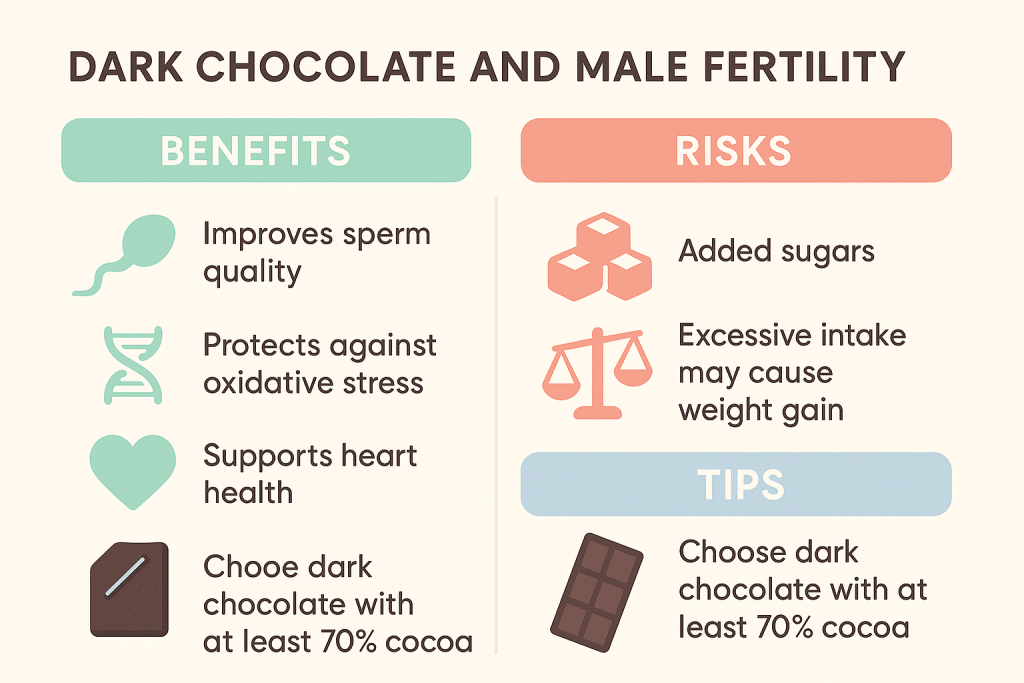
Let’s start with the hero of the story: dark chocolate, especially the kind with 70% or more cocoa. It’s loaded with antioxidants—compounds like flavonoids and polyphenols that help protect your cells from oxidative damage.
Why does that matter for fertility? Because oxidative stress is a major cause of male infertility. It damages sperm DNA, reduces motility, and lowers sperm count. Research shows that antioxidants can help reduce this stress and improve sperm quality (Bisht et al., Nature Reviews Urology, 2017). Learn more about oxidative stress and male infertility here.
Men with antioxidant-rich diets tend to have:
- Higher sperm motility
- Better sperm morphology
- Improved DNA integrity (Majzoub & Agarwal, Reproductive Biology and Endocrinology, 2017)
Dark chocolate also delivers essential minerals like magnesium and iron, which support testosterone production and healthy blood flow. Discover how to increase testosterone naturally for better fertility.
Cocoa’s natural compounds, including serotonin precursors, may also help reduce stress — a known factor that affects male hormone balance (Valko et al., Frontiers in Reproductive Health, 2021). See how stress affects sperm and semen quality.
In the UK, nutrition experts often recommend antioxidant-rich foods — like berries, nuts, and dark chocolate — as part of a balanced Eatwell Guide diet to support reproductive health.
Does Chocolate Hurt Male Fertility? The Sugar Connection Explained

Now, let’s flip that chocolate bar over and talk about the sneaky villain: sugar.
While dark chocolate can be a health ally, milk chocolate and overly sweetened varieties? Not so much.
High sugar intake, particularly from sugar-sweetened drinks, has been linked to lower sperm motility in men who consume large amounts compared with those who consume less (Chiu et al., Human Reproduction, 2014). Learn more about how sugar impacts male fertility.
Additionally, higher sugar consumption has been associated with lower sperm concentration and total sperm count (Nassan et al., Reproductive Toxicology, 2021), while narrative reviews indicate that frequent intake of sugar-sweetened beverages may negatively affect sperm quality through increased oxidative stress and metabolic disruption (Tavárez et al., Nutrients, 2025).
Excess calories from chocolate and other sweets can also contribute to weight gain and obesity — known risk factors for infertility. Obesity can disrupt hormone production, decrease testosterone, and increase oestrogen levels, which can further impact sperm quality (Hammoud et al., Fertility and Sterility, 2008). Read more about how weight affects male fertility.
Even too much dark chocolate can be problematic if consumed excessively. It’s calorie-dense, and moderation is key to keeping those benefits sweet rather than bitter.
How Much Dark Chocolate to Eat for Fertility Benefits (UK Guide)
So, how do you indulge without harming your fertility goals?
- Choose smart: Go for 70%+ dark chocolate with low sugar content. Read the label carefully — “dark” doesn’t always mean healthy.
- Moderation matters: Around 20–40 g (one or two squares per day) is enough to get antioxidant benefits without overdoing sugar or calories (Katz et al., Antioxidants & Redox Signaling, 2011).
- Avoid milk chocolate: It’s higher in sugar, lower in cocoa, and contains far fewer antioxidants.
And remember, chocolate isn’t a fertility miracle on its own. Pair it with a balanced diet — think leafy greens, lean proteins, nuts, and oily fish — plus regular exercise and stress management. That’s the winning formula for better male reproductive health. Try following a Mediterranean-style diet for fertility and check our male fertility supplements guide. You can also learn more about how exercise supports sperm health.
Here’s the sweet truth: chocolate’s impact on male fertility is a tale of two bites.
- The good bite: Rich in antioxidants, dark chocolate may support better sperm health, motility, and hormonal balance, especially when paired with a healthy lifestyle (Martínez-Soto et al., Nutrients, 2021).
- The bad bite: Excess sugar, calories, and fat from milk chocolate can disrupt hormones and damage sperm quality (Chiu et al., 2014).
So next time you reach for your chocolate stash, choose wisely. A little dark chocolate might just sweeten your fertility journey — and give your swimmers the antioxidant love they deserve. Want to go beyond chocolate? Discover fertility superfoods for men and the right antioxidants for male fertility.
Frequently Asked Questions: Dark Chocolate & Male Fertility
How does dark chocolate benefit male fertility?
Dark chocolate is rich in antioxidants that fight oxidative stress, a key factor in damaging sperm. This may help improve sperm motility and DNA integrity (Bisht et al., 2017). Learn more about oxidative stress and sperm health.
Can eating dark chocolate increase sperm count?
Possibly. The antioxidants and flavonoids in dark chocolate can protect sperm and support higher counts in men with oxidative stress (Majzoub & Agarwal, 2017). See how to increase sperm count naturally.
How much dark chocolate should I eat for fertility benefits?
One or two small squares (about 20–40 g) of 70%+ dark chocolate daily can offer antioxidant benefits without excess sugar or calories (Katz et al., 2011).
Does milk chocolate offer the same benefits?
No. Milk chocolate has less cocoa and more sugar, which reduces its antioxidant value and may harm sperm health (Chiu et al., 2014).
Can too much chocolate harm fertility?
Yes. Overeating chocolate, even dark adds calories that may lead to weight gain and hormone imbalance (Hammoud et al., 2008). Read more about how weight affects male fertility.
Note: This content is informational and not a substitute for professional medical advice. Always speak with a healthcare provider for personalised guidance.