Many people assume that men remain fertile for life, but science tells a more complex story. While there’s no male equivalent of menopause, male fertility with age does gradually decline. For couples trying to conceive, understanding how male fertility by age changes is crucial — not only for family planning, but also for identifying when lifestyle adjustments or fertility testing might help.
In this guide, we’ll explore what happens to sperm and hormone levels as men age, the evidence behind male infertility and age, and the practical steps men can take to preserve their reproductive potential for longer.
The Biology Behind Male Fertility & Ageing
Male fertility depends on the continuous production of healthy sperm — a process called spermatogenesis — and the hormonal and cellular systems that support it. Over time, each of these systems becomes less efficient.
- DNA repair and cell renewal slow down – Ageing germ cells accumulate DNA damage that isn’t fully repaired, leading to more sperm with genetic breaks or errors.
- Oxidative stress rises – Reactive oxygen species (ROS) increase naturally with age. When antioxidant defences can’t keep up, ROS attack sperm membranes and mitochondria, reducing motility and fertilising ability.
- Epigenetic drift – Subtle chemical changes to DNA (like methylation) alter gene expression in sperm, which may affect embryo development.
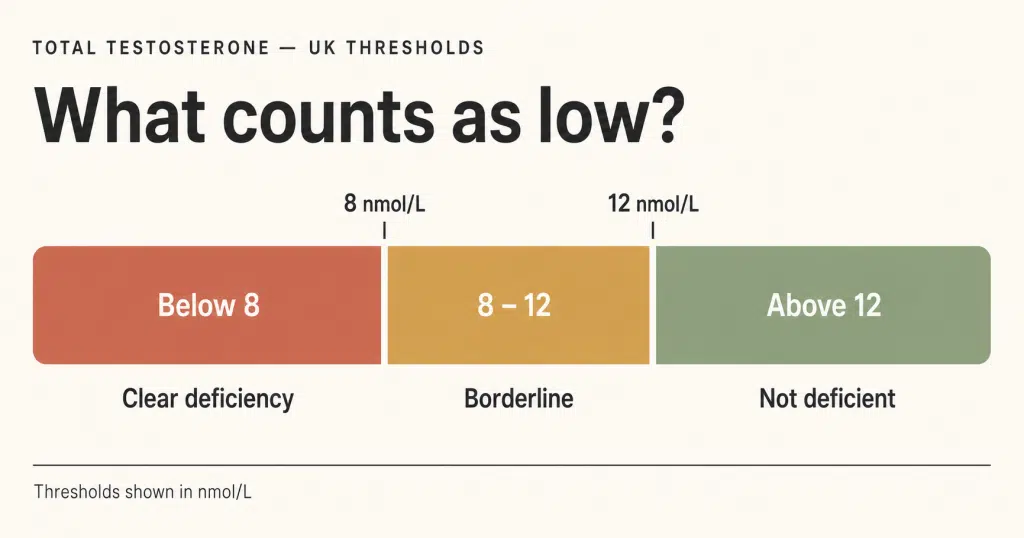
- Hormonal balance shifts – Testosterone levels decline gradually from the mid-30s onwards, while follicle-stimulating hormone (FSH) and luteinising hormone (LH) fluctuate, reducing sperm output.
- Overall health matters – Conditions such as obesity, type 2 diabetes, and cardiovascular disease are increasingly common with age and are strongly linked to lower sperm quality.
For reliable testing and monitoring, visit the ExSeed Home Sperm Test page to learn how you can check your fertility at home in minutes.
What the Evidence Shows: Trends in Male Fertility by Age
Male Fertility by Age: Declines in Semen Parameters
Several large reviews show clear evidence that fertility age for male affects semen quality.
A 2023 global meta-analysis reported that sperm motility, morphology, and semen volume all decline with age — even when sperm concentration remains within the normal range (Human Reproduction Update).
Similarly, Frontiers in Aging (2025) found that men over 40 had significantly lower total motile counts than those in their 20s. These results underline that while men may technically remain fertile, the efficiency of conception decreases over time.
DNA Fragmentation & Genetic Risks
Another well-established link between male infertility and age involves sperm DNA fragmentation — the breaking or damage of genetic material inside sperm.
As men age, sperm DNA fragmentation index (DFI) scores rise, correlating with lower conception rates and higher miscarriage risk (Reproductive Biology and Endocrinology).
Older paternal age also contributes to an increase in spontaneous genetic mutations — called de novo mutations — that can elevate the risk of certain developmental disorders in offspring (Frontiers in Aging).
While these risks remain relatively small on an individual level, they highlight the biological impact of age on male reproductive health.
Fertility Outcomes & Time to Pregnancy
When researchers control for female age, they still find that conception tends to take longer as men’s fertility age increases.
Studies have shown that couples where the male partner is over 40 may take nearly twice as long to conceive compared with younger men. In assisted reproduction, older paternal age is also associated with lower success rates and slightly higher miscarriage risk.
For men in their 30s or 40s, small lifestyle adjustments can make a big difference. Quitting smoking, maintaining a healthy BMI, and improving nutrition all support sperm function. Read 7 Ways to Improve Sperm Health for evidence-based guidance.
Population & Epidemiological Trends
Male fertility decline isn’t only a personal issue — it’s a population trend.
Over the last five decades, sperm counts among men in Europe, North America, and Australasia have dropped by more than 50 % (Human Reproduction Update).
Environmental pollutants, endocrine-disrupting chemicals, chronic stress, and rising obesity rates are major contributors.
The combined effect of ageing and lifestyle means many men reach their 30s with already reduced sperm quality compared with previous generations. Practical prevention steps are outlined in 9 Surprising Habits That Damage Sperm.
Male Fertility and Age Across the Decades
20s to Early 30s – The Peak Years
This is the biological “prime time” for male fertility. Testosterone is high, sperm production is fast, and DNA integrity is typically excellent.
However, lifestyle still matters — smoking, drug use, poor diet, and frequent heat exposure (from saunas, hot tubs, or tight trousers) can all impair sperm quality.
Early awareness can help maintain strong fertility into later life. Simple choices like staying active, eating antioxidant-rich foods, and limiting alcohol already pay off.
Mid-30s to Late 30s – Early Signs of Decline
From the mid-30s, male fertility with age starts to show measurable changes. Sperm motility falls, semen volume shrinks slightly, and DNA fragmentation becomes more common.
These gradual shifts can lengthen the time it takes for conception, especially if female fertility is also starting to decline.
Scientific evidence confirms that motility and morphology begin to worsen during this stage (Frontiers in Aging, 2025).
For a quick status check, consider an at-home fertility test for men to measure motility and count without clinic visits.
40s – Navigating Steeper Decline
In the 40s, changes in male fertility and age become more apparent. Testosterone may drop noticeably, sperm motility declines faster, and abnormal morphology increases.
Research also links advanced paternal age to a slightly higher risk of genetic or chromosomal abnormalities in offspring (Frontiers in Aging).
Nevertheless, conception remains possible. Many men father healthy children in their 40s, especially when maintaining a balanced lifestyle and managing stress.
Supplements can help optimise key nutrients — see How Omega-3 Supplements Improve Male Fertility for details.
50s & Beyond – New Challenges
After 50, fertility potential declines more steeply.
Semen volume and motility continue to fall, DNA damage rises, and overall vitality often depends heavily on general health. Age-related diseases, reduced hormone levels, and medication use may all play a role.
While natural conception is still possible, it often takes longer and carries a higher risk of miscarriage or genetic complications.
For men considering later fatherhood, sperm banking before 40 is a smart way to preserve options. Learn more in When to Consider Sperm Freezing.
Key Takeaways
- Male fertility declines gradually, not abruptly.
- Motility, morphology, and DNA integrity are most affected by age.
- Healthy habits — diet, exercise, and stress control — can delay decline.
- Testing matters. At-home sperm analysis from the mid-30s onward provides valuable insights.
- Preservation helps. Sperm freezing earlier in life offers peace of mind for future family planning.
To explore your own fertility, visit the ExSeed Home Sperm Test page and learn how to support reproductive health naturally in our Guide to Improving Sperm Quality Naturally.